
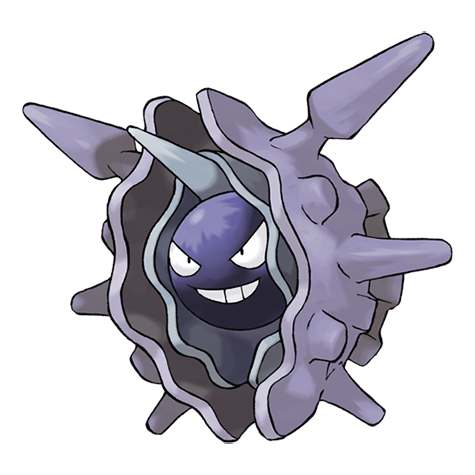
Cloyster Base Stats Total 525
Cloyster worst-to-best stats
This defaults to level 100. Worst assumes 0 IVs, 0 EVs, and a hindering nature for non-HP stats. Best assumes 31 IVs, 252 EVs, and a boosting nature for non-HP stats. HP ignores nature.
#0091
Profile Details
Local database-style facts for names, regional dex numbers, abilities, training, body data, breeding, and encounter planning.
This defaults to level 100. Worst assumes 0 IVs, 0 EVs, and a hindering nature for non-HP stats. Best assumes 31 IVs, 252 EVs, and a boosting nature for non-HP stats. HP ignores nature.
Protects against critical hits.
Extends two-to-five-hit moves and Triple Kick to their full length every time.
Protects against damage from weather.
Forms & Variants
Local form data covers default, regional, battle-only, Gigantamax, cosmetic, gender, and alternate varieties where the source data exposes them.
Shell Armor, Skill Link, Overcoat
Type Vulnerabilities
Modern type-chart damage against Cloyster's water / ice typing. Ability, item, weather, and Terastallization changes are not applied here.
No type immunities.
Evolution Line
Cloyster is stage 2 of 2 in a linear evolution family with 2 Pokemon.
Pokedex Entries
Local flavor text entries grouped by the generations where this Pokemon actually has a Pokedex entry. Empty generations stay hidden.
When attacked, it launches its horns in quick volleys. Its innards have never been seen.
For protection, it uses its harder- than-diamonds shell. It also shoots spikes from the shell.
Once it slams its shell shut, it is impossible to open, even by those with superi or strength.
CLOYSTER that live in seas with harsh tidal currents grow large, sharp spikes on their shells.
Even a missile can't break the spikes it uses to stab opponents. They're even hard er than its shell.
CLOYSTER is capable of swimming in the sea. It does so by swallowing water, then jetting it out toward the rear. This POKéMON shoots spikes from its shell using the same system.
It swims in the sea by swallowing water, then jetting it out toward the rear. The CLOYSTER shoots spikes from its shell using the same system.
Its shell is extremely hard. It cannot be shattered, even with a bomb. The shell opens only when it is attacking.
When attacked, it launches its horns in quick volleys. Its innards have never been seen.
It fights by keeping its shell tightly shut for protection and by shooting spikes to repel foes.
Once it slams its shell shut, it is impossible to open, even by those with superior strength.
CLOYSTER that live in seas with harsh tidal currents grow large, sharp spikes on their shells.
It fights by keeping its shell tightly shut for protection and by shooting spikes to repel foes.
Cloyster that live in seas with harsh tidal currents grow large, sharp spikes on their shells.
Its shell is extremely hard. It cannot be shattered, even with a bomb. The shell opens only when it is attacking.
Cloyster is capable of swimming in the sea. It does so by swallowing water, then jetting it out toward the rear. This Pokémon shoots spikes from its shell using the same system.
Its hard shell cannot be shattered—not even by a bomb. The contents of the shell remain unknown.
Excavation of the tombs of ancient hunting tribes has turned up many spears tipped with spikes that had fallen off this Pokémon’s shell.
If areas of Cloyster’s very hard shell get damaged, those areas swell, gradually growing into large sharp spikes.
Slowpoke tails are its favorite food. It has even been known to come up on land to look for Slowpoke from time to time.
For protection, it uses its harder-than-diamond shell. It also shoots spikes from the shell.
Its shell is extremely hard. It cannot be shattered, even with a bomb. The shell opens only when it is attacking.
Once it slams its shell shut, it is impossible to open, even by those with superior strength.
Move Browser
Breeding groups: Water3